当前位置: “讲好中国故事”创意传播国际大赛>
《光影的变奏——古今交织与多元碰撞的现代性》——2024“讲好中国故事”创意传播国际大赛全国大学生专项赛获奖作品展播
发布时间: 2025-07-21 | 来源: 中国网 | 作者: 张猛、丁智扬、龙甲申、杨诗甲
现代性,究竟意味着什么?它是一个不断演进的过程,是过去与现在的交织,是时间与空间的交响乐。现代性不是一尊凝固的雕塑,而是一种活跃的脉动,一种穿越历史长河、不断变化与再生的力量。它不是单一的,而是多元的,是对过去的传承与超越,是对未来的期许与构建。在这组影像中,北京这座古老而现代的城市,正以其独特的方式回应这一争论许久的哲学命题。这里,古老的宫殿与现代的钢铁高楼并肩而立;历史的回响与当下的喧嚣交织共存。每一幅影像,都是对现代性深刻命题的诗意回应,讲述着文化的延续、传统的创新、历史的传承与现代生活的碰撞。光影之下,时空交错、古今交融,展现出一幅跨越时空的画卷。这里有历史的余韵、有现代的节奏,他们共生于北京这片土地上,恰如其分地交织成了一种和谐的美感。
These are the questions that philosophers have long pondered, the tensions they have wrestled with across the centuries. And yet, in the city of Beijing—a place where ancient walls hum with the rhythm of the future—these questions are not mere abstractions. Here, time does not stand still; it merges. In this city, where history and innovation dance in delicate balance, the answer is not found in rupture, but in fusion. Through the lens, we see modernity not as a break from the past, but as its living continuation—where every street, every stone, every shadow holds the legacy of what was, what is, and what may yet be.
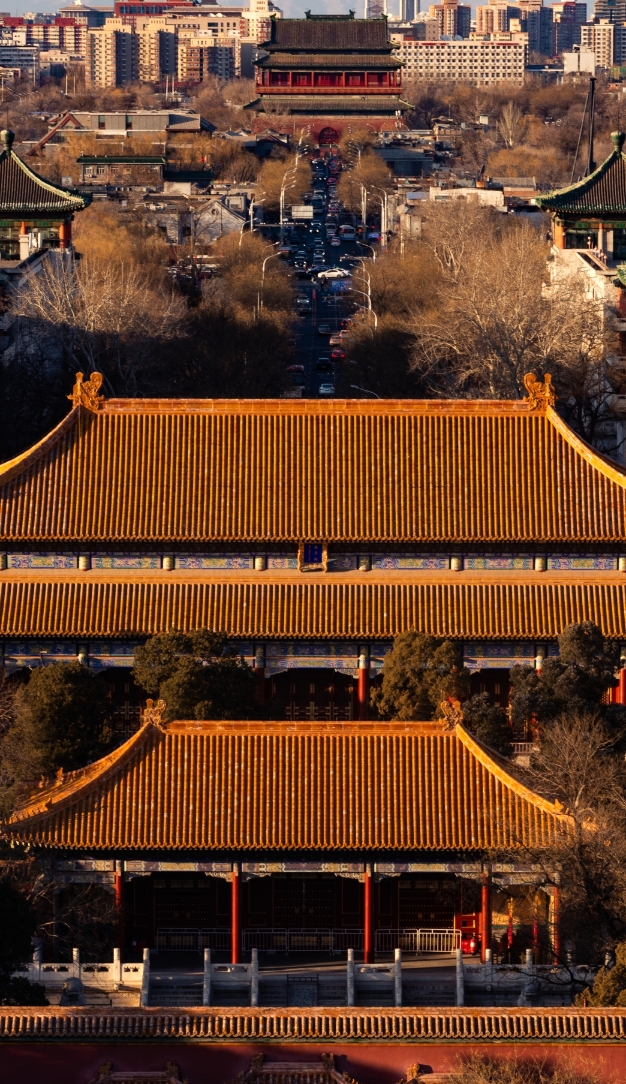
From the Peak of Jingshan: The Central Axis of Beijing
从景山俯瞰北京中轴线:历史与现代的交响
站在景山的高处,眼前的北京中轴线如一条贯穿古今的纽带,横亘在时间的长河中,宛如一条连接过去与未来的脉络。古老的寿皇殿依然雄伟,沐浴在晨光里,依稀能听见曾经帝王的足音。远处,那些现代化的高楼大厦,玻璃与钢铁交织成的城市肌理,宛如时代的印记。古与今在这里并非对立,而是深深相融。古老的宫殿、庄严的庙宇与现代的摩天大楼、繁华的街区交相辉映,时光的每一寸流转,都在这座城市的天际线中留下印记。历史的脉搏与现代的步伐,在这片古老的土地上找到共鸣,古老的文化在现代的节奏中继续歌唱,现代的气息又在历史的土壤中生根发芽。这是一种深刻的时空对话,是历史与现代、传统与创新的完美交融。
The view from Jingshan offers a magnificent tapestry of Beijing, where history and modernity intertwine in a delicate yet profound dance. Below, the ancient Shouhuang Hall stands as a solemn reminder of the imperial past, its grandeur whispering the stories of a bygone dynasty. In the distance, the sleek modern buildings of Beijing’s skyline rise—symbols of a city constantly in motion, forever transforming. The ancient central axis of Beijing, stretching from the Bell Tower to the Temple of Heaven, serves as the spine of this urban landscape. The ancient eaves of the royal palaces contrast sharply with the towering glass structures, yet neither dominates; they complement. The city’s soul is not defined by the clash of opposites but by their harmony. It is in the steady gaze of these traditional structures, in their alignment with the modern cityscape, that we find the quiet resilience of Chinese culture—a legacy of unity and continuity. This photograph is not merely an image of architecture; it is a meditation on how time itself can be measured in layers—each era building upon the last, none fully replacing the other. Modernity here is not a break from history, but a slow, respectful unfolding of it.
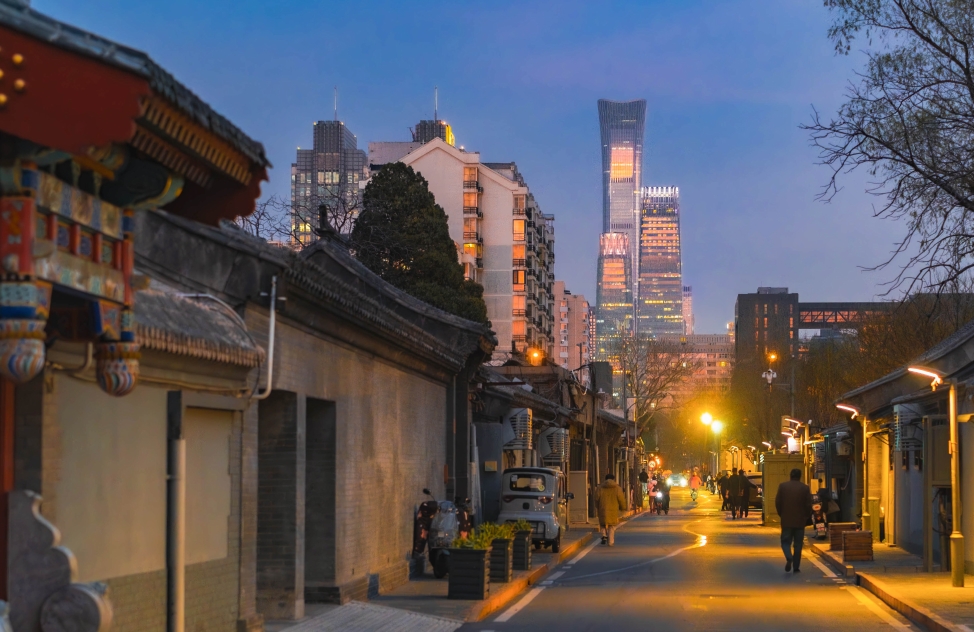
Night in Xizongbu Hutong: An Organic Coupling of Eras
西总布胡同的夜:有机的时空交织
夜色降临,西总布胡同静谧的街道上,古老的石板路仍然闪烁着微光,而远处国贸的灯火则如星辰般璀璨。它们相互呼应,相互交织,仿佛两种截然不同的世界在这座城市的脉动中找到了交集。国贸代表着现代的活力,是北京不断创新与崛起的象征;而胡同则是北京传统文化的根脉,它承载着千百年的历史记忆。在这里,古老与现代并非偶然的碰撞,而是深深根植于这座城市的必然。胡同依旧安静地延展,而新兴的高楼大厦与它相依相伴,历史的余韵与现代的风采交织成了一幅和谐的画面。新与旧的关系,并非是对立与排斥,而是在一种相互尊重与包容中形成了有机的共生。北京的现代性,正是过去与现在、传统与创新在这座城市中的深刻融合与永恒共舞。
As dusk settles over Xizongbu Hutong, a quieter, more intimate narrative emerges. The towering skyscrapers of Guomao loom in the distance, casting their brilliant glow across the horizon. Their lights speak to the ceaseless forward march of technology, industry, and innovation. Yet, below, the dimly lit lanes of the hutong tell a different story. Here, the ancient alleyways of Beijing persist—weathered, yet enduring. In this tranquil scene, the past does not resist the future, nor does the future seek to erase the past. Instead, both coexist, their relationship an organic coupling. The traditional courtyard houses, with their narrow lanes and intricate rooflines, are not out of place beside the gleaming modernity of the city’s skyline. This photograph captures more than a mere moment in time; it reflects the deep, almost sacred connection between history and modernity. It is not a juxtaposition of conflict, but an intimate conversation. This is Beijing’s answer to the riddle of modernity—not a rejection of tradition, but an affirmation of its role in shaping and enriching the present.
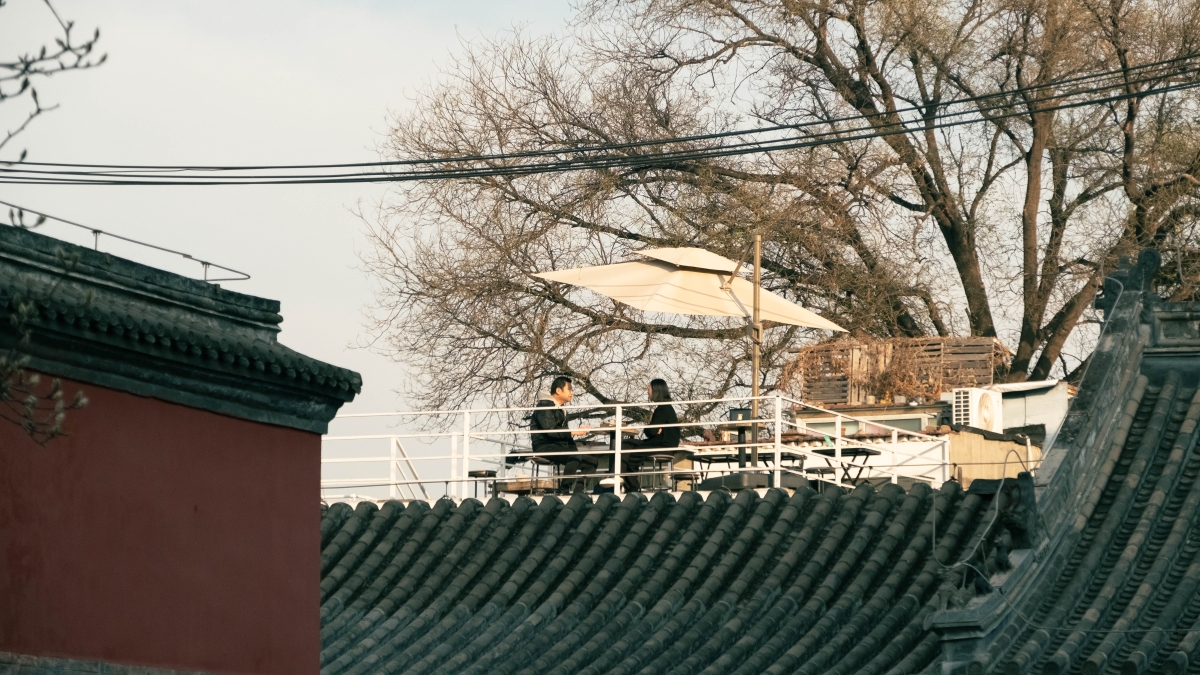
Afternoon Tea at Bai Ta Temple: A Blend of Old and New
白塔寺的下午茶:古今生活方式的交融
在白塔寺旁的四合院里,露台上的咖啡桌安静地摆放,映衬着古老的建筑和绿树成荫的院落。人们坐在露台上,手捧着咖啡,享受着现代的生活方式。而周围,古老的建筑、雕花的窗棂、青砖的墙面,依旧默默诉说着历史的故事。在这个空间中,过去与现在并非隔绝,而是以一种和谐的姿态交融。现代的生活方式与传统的建筑形式相得益彰,彼此滋养,彼此成就。这里,古老的建筑没有消失,它被赋予了新的生命,成为现代生活的一部分。过去的文化与当代的生活方式在这里找到了共生的契机,历史的沉淀与现代的创新在此刻交织成了一种全新的生活美学。现代性并不是对传统的否定,而是在传统的土壤上播种新的种子,让过去的智慧与今天的创意相互辉映。
In the shadow of Baita Temple, where the past rests quietly among the present, a café perched atop a traditional courtyard offers a striking vision of how the old and new can coexist without discord. The modern ritual of afternoon tea unfolds in a space that was once part of the imperial complex, now transformed into a public space for relaxation and leisure. The delicate balance between the ancient and the contemporary is palpable. The rustic charm of the courtyard walls, still bearing the weight of centuries, frames the sleek, clean lines of modern tables and chairs. The soft hum of conversation blends with the stillness of history, each sip of tea a gentle nod to the passage of time. This photograph speaks of a transformation—not of displacement, but of adaptation. It suggests that modernity does not discard the past but incorporates it, allowing ancient spaces to breathe new life. The old does not suffocate the new, nor does the new erase the old; they inhabit the same space, creating a richer, more layered existence. Through this photograph, we glimpse a vision of modernity that is not a departure, but a continuation—an ever-developing story that bridges generations.
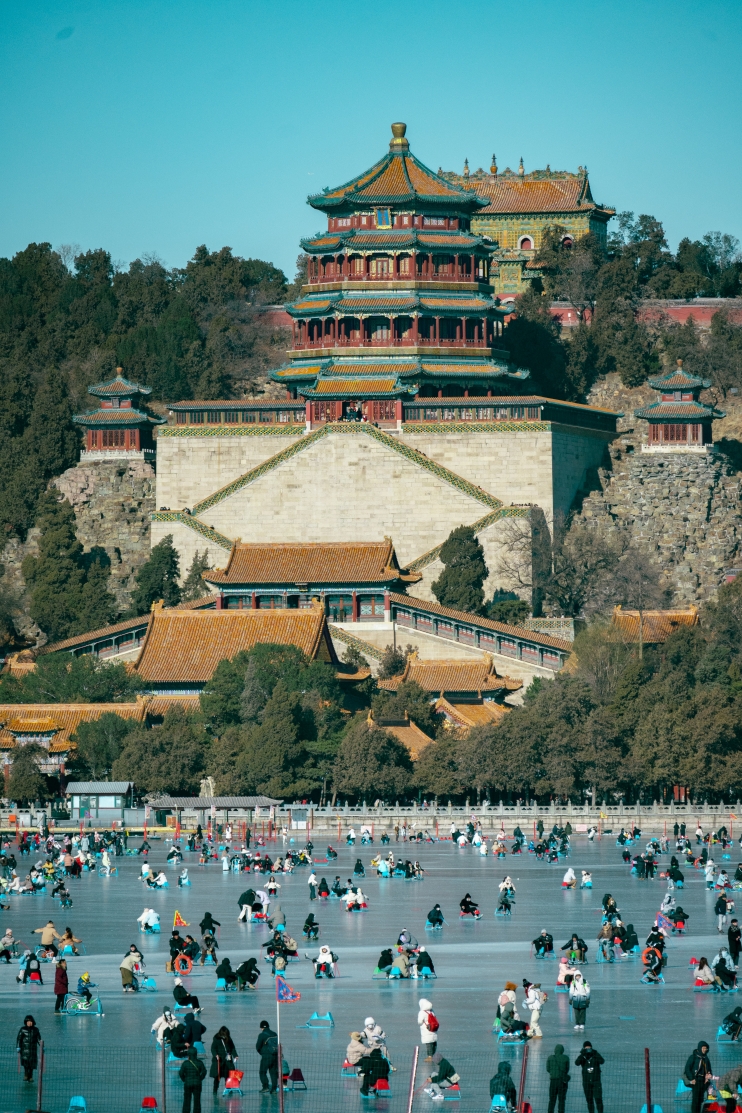
Kunming Lake Ice Rink: A Fusion of Past and Present
昆明湖冰场:历史与现代的完美接续
每当冬季降临,昆明湖的冰面便成为了人们的乐园。曾经仅为帝王享有的皇家园林,如今已开放给普通市民,成为了一片共享的冰雪天地。人们在冰面上飞舞,笑声与冰刀的划过声交织成了美丽的旋律。这一切似乎在诉说着时间的流转,历史的延续。昆明湖曾是皇家专属的私密花园,而今天,它是无数北京人共同享受的浪漫约会场。这里,过去的皇家气派与现代市民的生活交织成了一幅温暖的画面。现代性并不是一个割裂的过程,而是历史与现代的无缝连接。昆明湖的冰场,就是历史与现代在这片土地上找到了共同的节奏,它象征着过去的辉煌与现代的活力在这一刻的完美融合。
Every winter, Kunming Lake, nestled within the Summer Palace—a testament to imperial opulence—transforms into an ice rink. Once a playground for emperors, this space has been reimagined, offering a new kind of enjoyment to Beijing’s residents. The past is not lost here; it is simply reinterpreted, adapted to the rhythms of modern life. As people glide across the ice, they are participating in an ancient landscape, but they are doing so in a manner that is unmistakably modern. The ice rink, a symbol of the city’s seasonal transformation, also embodies a deeper shift in Beijing’s relationship with its history. The royal grounds, once restricted to a select few, are now open to the public, democratizing the experience of history. Here, modernity is not the erasure of the past but its reinvention, offering a new form of connection that is both accessible and inclusive. In this photograph, the ice rink becomes a metaphor for the fluidity of time itself—a space where the past and the present glide together, effortlessly and gracefully.
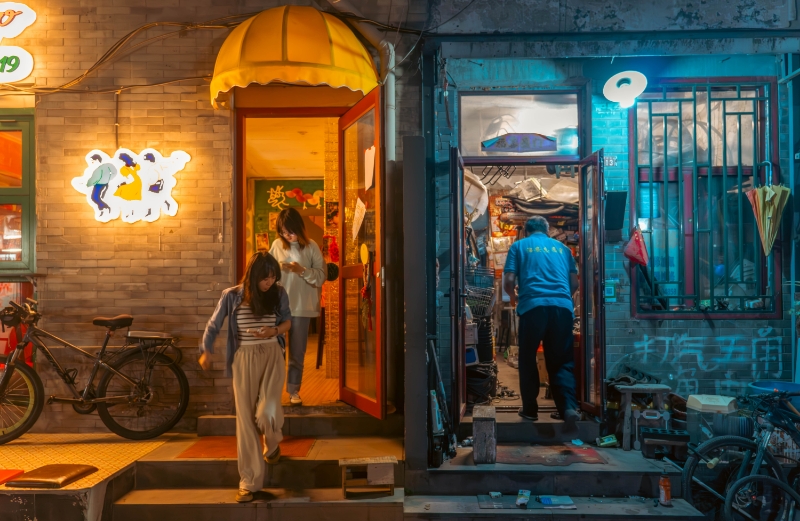
Yellow and Blue Shadows in Nanluoguxiang: The Many Faces of Modernity
南锣鼓巷的黄蓝光影:多样的现代性
夜幕降临,南锣鼓巷,黄蓝交织——温暖的琥珀色光辉从咖啡馆的窗内洒出,柔和地与一旁沉静的蓝影交织。左侧,两位年轻女子走出咖啡馆,她们的步伐轻盈、鲜活,如同现代生活的脉动,迅捷而明亮;右侧,一位老人缓步回家,步伐沉稳,仿佛岁月的痕迹在他身上悄然流淌。他的身影,诉说着另一个时代的故事——那是手指沾染了修车油迹的岁月,是植根于胡同的生活,是静谧与平凡的美丽。在这片空间里,活力与沉稳、流动与凝固、过去与现在,共同构成了现代性的多样面貌。这里没有对立、只有并存,不同元素在此交织、融合,奏响着和谐的旋律。现代性不再是一个直线的进程,而是丰富多元的体验,是过去与现在的对话,是时间与记忆的交织。
In the dimming light of Nanluoguxiang, where the echoes of history linger in every brick, the old and new coexist in a delicate dance. The warm amber glow spilling from café windows meets the cool, contemplative blue shadows of the street, embodying the contrasting rhythms of contemporary Beijing. On one side, two young women, freshly emerged from their coffee, move with the swift pulse of modernity—fluid, bright, and transient. On the other, an elderly man, with quiet deliberation, steps into his home, a figure whose very presence speaks to another era—one of hands stained by the work of bicycle repairs, of a life rooted in the timeless simplicity of hutong life. In this space, light and shadow, youth and age, movement and stillness, converge to reflect the mosaic of modern existence. It is not a world of opposition, but of coexistence, where different ways of life—fast and slow, bold and quiet—are woven together, where modernity is not a linear trajectory, but a rich, layered experience of pluralities. This moment in Nanluoguxiang whispers that modern life, far from erasing the past, is its conversation, its companion, its ever-evolving, inclusive rhythm.
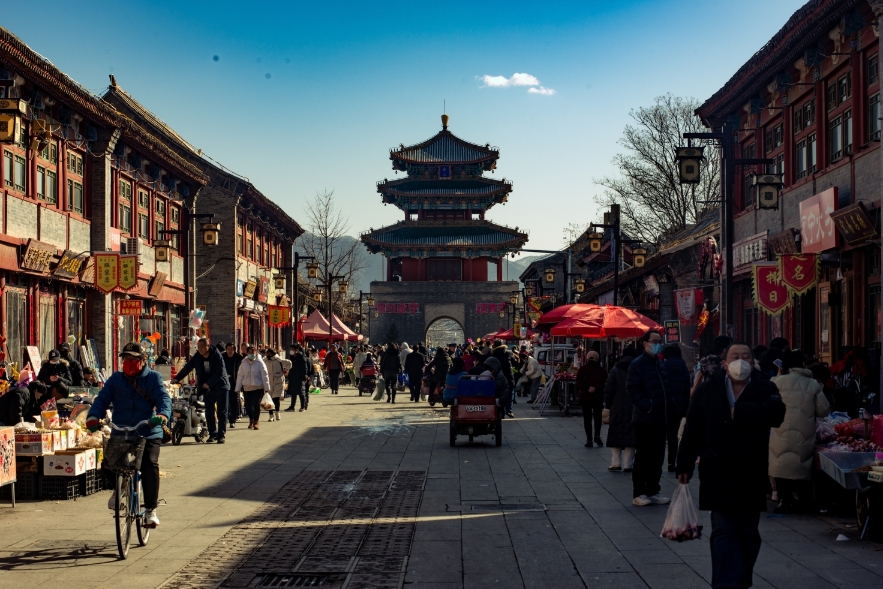
The Bustling Market of Yongning: Tradition in the Modern World
热闹的永宁大集:乡村与城市的共生
远离城市的喧嚣,永宁大集悄然展开。这里,古老的集市与现代化的城市生活并行不悖,传统的集市文化与现代的商业气息交织成一种独特的韵律。大集的热闹,仿佛是一首温暖的田园诗,述说着乡村与城市、传统与现代的无缝连接。这里的烟火气息与乡愁交织,古老的集市仍然热闹非凡,现代的节奏却悄然融入其中。永宁大集提醒我们,现代性并不是城市化的唯一答案,乡村的生命力与活力在这片土地上同样找到了延续。这里,传统与现代没有对立,而是相互交融,形成了一种充满生命力的和谐美景。
Moving beyond the city’s bustling urban core, we find ourselves in the countryside of Beijing’s outskirts. Yongning Market, a historic market dating back to the Ming Dynasty, remains a vibrant center of life. Here, the bustling energy of the market stands as a reminder that modernity is not simply about urbanization and technology but about the survival of traditions, even in a rapidly changing world. The stalls are packed with fresh produce, local delicacies, and goods from all corners of the region. The air is filled with the scents of food and the sounds of bargaining. This market, though ancient, is full of life, a testament to the enduring spirit of Beijing’s rural communities. This photograph offers a different perspective on modernity—one that is grounded in the richness of tradition and community. Modernity, as represented here, is not an urban phenomenon but a universal force that manifests in diverse ways, weaving together past and present, city and countryside.
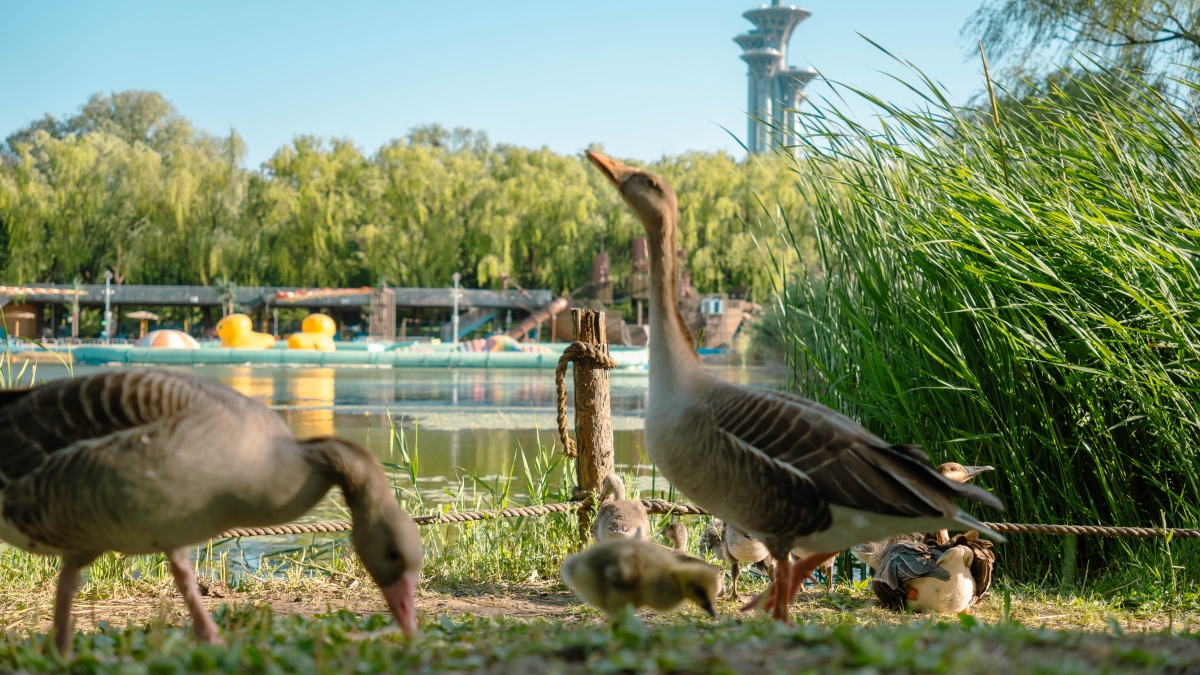
Harmony with Nature at the Olympic Forest Park
人与自然的和谐共生:现代性的生态之美
在北京的奥林匹克森林公园,高塔与湖面上的鸭群相映成趣,绿色生态与现代建筑相得益彰,一幅美丽的画卷在眼前徐徐展开。公园成为城市绿肺,并不因奥运的结束而荒废,这里没有大兴土木的浪费,而是充满着可持续发展的智慧。现代性并不意味着对资源的一时的滥用与枯竭,而是富有远见的永续发展。
The final photograph captures a moment of serenity, as the natural world meets the human-made in a seamless expression of modernity’s potential for harmony. The Olympic Forest Park in Beijing is home to both lush greenery and modern architecture. In the foreground, a flock of ducks glides across the tranquil waters, while in the background, the Olympic Tower rises, its sleek modern form reaching toward the sky. This image speaks to the fundamental idea that modernity is not synonymous with environmental destruction but with a new form of co-existence. The park has become the green lung of the city, and itdidn’t fall into disuse despite the end of the Olympic game. There is nooverbuilding here, but instead, it is filled with the wisdom of sustainable development. Modernity does not imply the temporary abuse and depletion of resources; rather, it signifies forward-thinking and sustainable development.
在这组影像中,光影交错、古今融合,过去与现在在每一帧中悄然交汇。现代性并非一个断裂的过程,而是一个延续与变迁的舞蹈,是时间的交错、历史的回响。北京,这座古老的城市,正以其独特的方式诉说着这一切。它不仅是历史的见证者,更是现代性的诠释者。在这座城市里,传统与现代并非对立,而是和谐共生、彼此交融。现代性并不是一次性的创新,而是在历史的根基上不断迭代、升华的过程。在这里,古老的文化与现代的生活交织成了一种美丽的韵律,而这段韵律,正是现代性最深刻的体现。
In the light and shadow that grace these images, we encounter the profound truth that modernity is not a rupture but a continuous unfolding, where the past and the present do not clash but converge, intertwining in ways both subtle and powerful. Each photograph is a meditation on the nuanced relationship between tradition and innovation, where modern life does not erase history but breathes new life into it, finding new relevance in the contemporary world. Modernity is not a uniform force; it is diverse, layered, and multifaceted. It is the quiet persistence of the old within the vibrancy of the new. In Beijing, a city rich with history and brimming with innovation, this relationship is particularly striking. It is a city where the ancient and the modern dance together, neither one overshadowing the other, but each illuminating the beauty of the other. Through this dance, we see that modernity is not an end, but a beginning—a process of transformation that, while always evolving, remains forever rooted in the timeless rhythms of history, culture, and nature.
学校名称:国际关系学院
主创团队:张猛、丁智扬、龙甲申、杨诗甲