当前位置: “讲好中国故事”创意传播国际大赛>
《湘西凤凰传统民居——吊脚楼及新时代变迁》——2024“讲好中国故事”创意传播国际大赛全国大学生专项赛获奖作品展播
发布时间: 2025-07-21 | 来源: 中国网 | 作者: 李岚娅
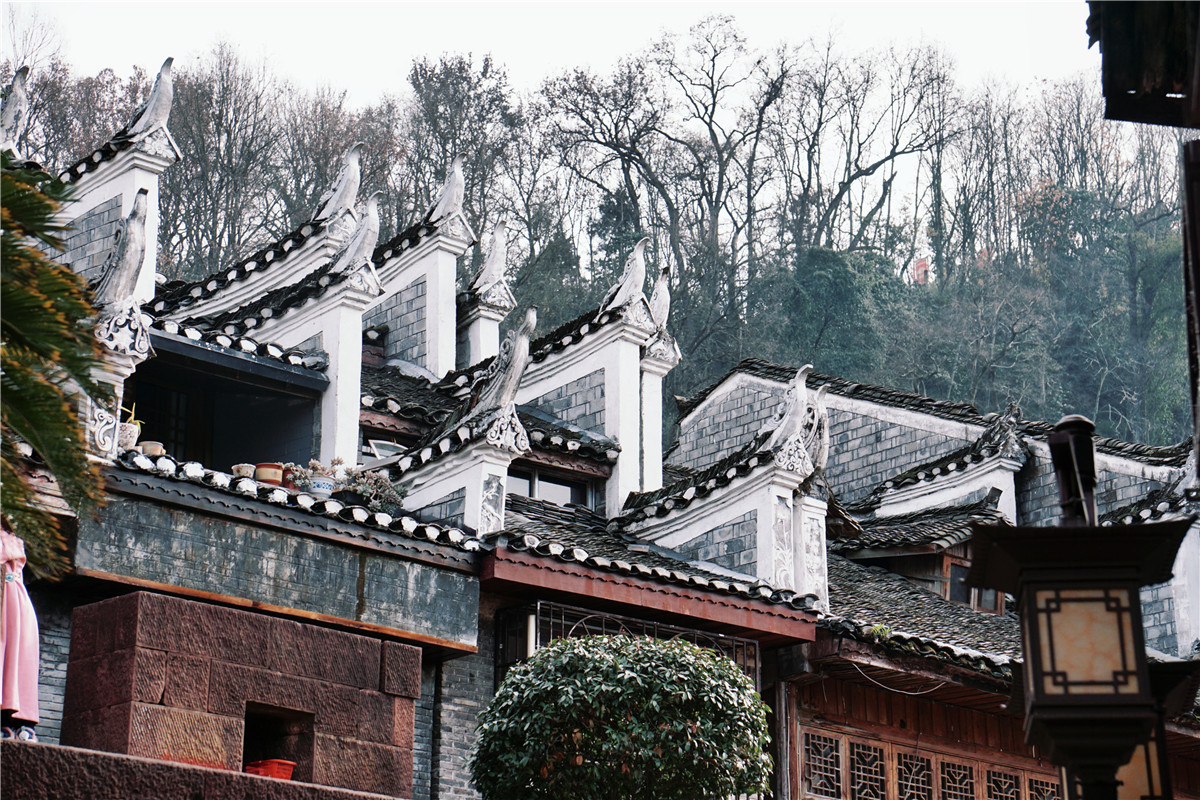
湘西凤凰,这里山峦叠嶂、林谷深幽,层层叠叠的封火墙以及飞檐翘角,成了不一样的风景线。
Fenghuang of western Hunan, where mountains rise and valleys descend into deep forests, is distinguished by its tiered firewalls and gabled roofs, creating a unique landscape.
湘西,位于湘鄂渝黔四省市的交界处,全称为:湘西土家族苗族自治州,这里是湖南省的最西部,也是湖南省内两个最大的少数民族——土家族和苗族的聚居地。在湘西的北面就是闻名世界的张家界地貌,受其影响,湘西大部分也都是山区,境内山峦叠嶂、林谷深幽。然而虽地处山区,却也有着非常丰富的水系资源和发达的水运系统。俗话说“一方水土养一方人”,在湘西这片具有浓厚神秘色彩的大地上,丰富的少数民族文化与汉文化产生了美妙的碰撞,让这里诞生了许多有民族特色的文人骚客和少数民族文化瑰宝。当然,在建筑艺术方面也具有独属于自己的风格特征,如今在湘西还能看见各种具有浓厚的民族文化特色的建筑,例如:牌坊、石板屋、会馆、摆手堂、文庙、吊脚楼等。
Xiangxi, located at the junction of Hunan, Hubei, Chongqing and Guizhou provinces, full name: Xiangxi Tujia and Miao Autonomous Prefecture, which is the westernmost part of Hunan Province, is also the home of Tujia and Miao, the two largest ethnic minorities in Hunan Province. In the north of Xiangxi is the world-famous Zhangjiajie landform, affected by it, most of Xiangxi is also a mountainous area, the territory of mountains, deep forest valley. However, although it is located in the mountainous area, it also has very rich water resources and developed water transportation system. As the saying goes,"One side nourishes the other side". On the land of western Hunan, which has a strong mysterious color, the rich minority culture and Han culture have a wonderful collision, so that many writers and poets with national characteristics and minority cultural treasures were born here. Of course, in the architectural art also has its own unique style characteristics, now in the west of Hunan can still see a variety of buildings with strong national cultural characteristics, such as: archway, SLATE house, guild hall, hand hall, Confucian temple, stilt house and so on.
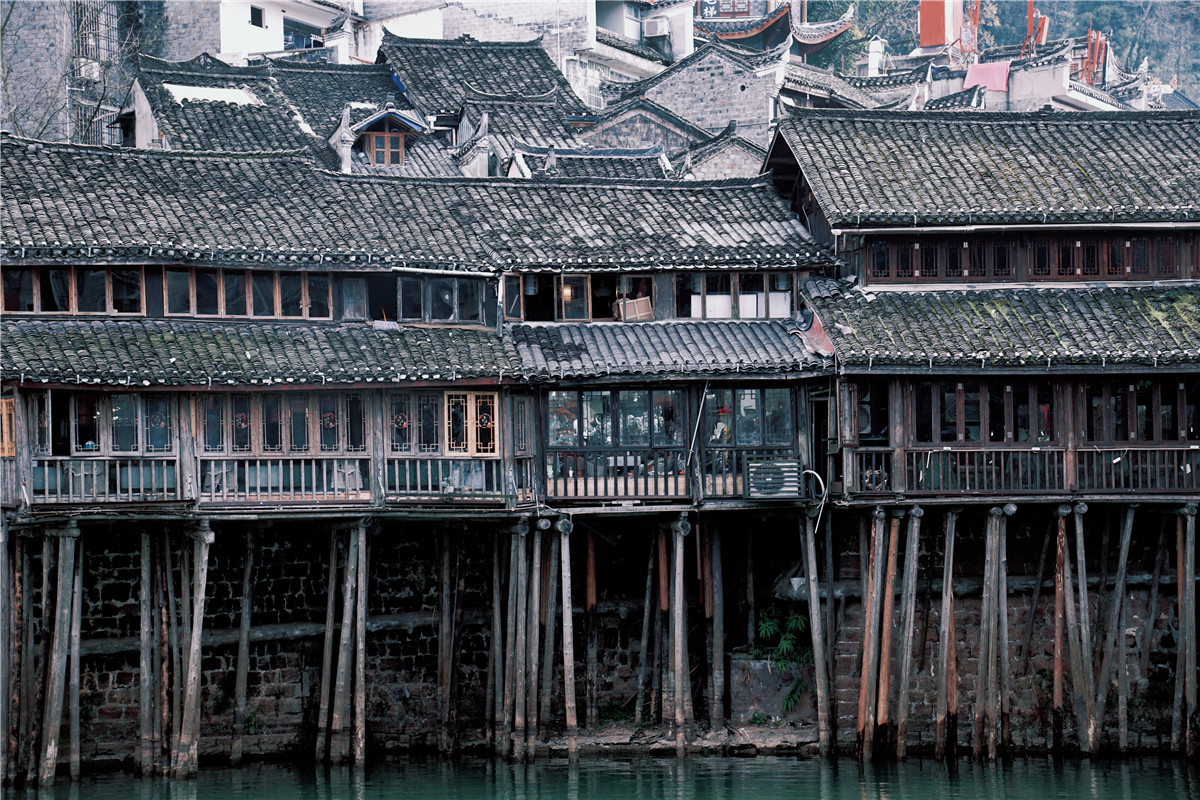
地域环境和丰富的少数民族文化造就了凤凰拥有浓厚的民族文化特色的传统民居建筑——吊脚楼。
The geographical environment and rich ethnic minority culture have given Fenghuang its traditional residential architecture with a strong ethnic cultural feature - the吊脚楼.
在湘西,得益于河流水系的发展,多数城镇都是沿河流兴建,并且依靠古代主要的货物运输方式——水运在河岸边建有多个水陆码头,在城镇中也建有会馆来发展商业贸易。如远近闻名的凤凰古城就是依沱江而建,在临江边一长排的吊脚楼让“凤凰古城”的名片更为耀眼夺目。其实在凤凰古城城墙外面有正常的连排的房屋,那为什么还会在江面上建起“悬吊”水面上的房屋呢?当中国进入大一统时期后,社会生活已经稳定,所建的城墙已经失去了它的功能性作用,而对人们来说,住所当然要考虑生活的便利程度。男人经商要去河边的运输码头,女人去河边用棒槌洗衣服,生活用水也要从河中取得,人们当然愿意在河边建房居住。然而由于城墙离河边距离较近,没有足够的距离建造房屋,所以人们想出了一种半干栏式民居建筑——将房屋的一部分靠下部的支柱支撑从而悬空在河上。时过境迁,随着河流生态环境的恶化、生活条件的改善、生活方式以及从事产业的转变,传统木质沿河吊脚楼的实质居住功能已经丧失,而作为具有美学意义的民居建筑景观,依然受到很多人喜欢,因此凤凰古城就成了湘西的一张“旅游名片”,推着湘西的经济发展。
In western Hunan, thanks to the development of river system, most towns are built along the river, and rely on the ancient main mode of cargo transport - water transport, to build a number of water and land docks on the river bank, in the town also built a hall to develop commercial trade. For example, the famous ancient city of Phoenix is built according to the Tuojiang River, and a long row of stilted buildings beside the river makes the name card of"Phoenix Ancient City" more dazzling. In fact, there are normal rows of houses outside the city walls of the ancient city of Phoenix, so why would they build"suspended" houses on the river? When China entered the period of great unity, social life had been stabilized, the walls built had lost their functional role, and for people, of course, the accommodation should consider the convenience of life. Men do business in the river to the transport dock, women go to the river to wash clothes with sticks, domestic water also to get from the river, of course, people are willing to build houses in the river. However, due to the close distance of the wall from the river, there was not enough distance to build houses, so people came up with a semi-columnar residential building - a part of the house is supported by the lower pillar and suspended over the river. With the passage of time, with the deterioration of the river ecological environment, the improvement of living conditions, the change of lifestyle and the transformation of engaging industries, the actual living function of the traditional wooden stilted houses along the river has been lost, but as a residential architecture landscape with aesthetic significance, it is still favored by many people. Therefore, the ancient city of Fenghuang has become a"tourism business card" in Xiangxi, pushing the economic development of Xiangxi.
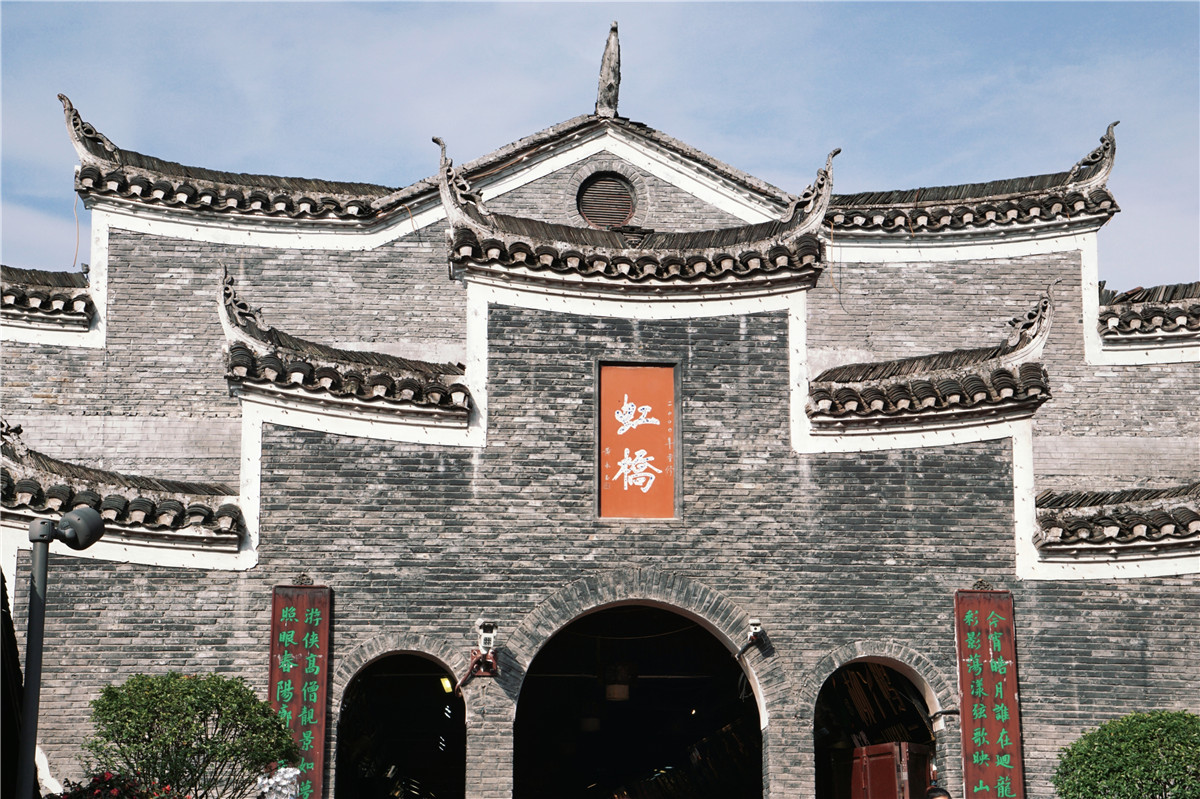
凤凰虹桥,一座古老的拱桥,同时也是一座廊桥,跨越了凤凰的母亲河——沱江,承担了重要功能。
The Rainbow Bridge, an ancient arch bridge and covered bridge, spans the mother river of Fenghuang - Tuojiang, and serves an important function.
进入新时代,随着人们生活方式及生活环境的转变,传统纯木质结构的吊脚楼或许已经丧失了它的居住群体,所以数量变得少之又少,但是民族文化乃一民族发展之根基,是万万不能丢的。所以,将吊脚楼的建筑元素融入现代房屋建筑中,也就是人们常说的“新中式房屋”,这样既保存了物质文化遗产,又保证了实用性。如今,在湘西任何一座县城,你都能发现这样的新中式房屋,他们同样有着飞檐翘角,花窗修饰,让你感受到吊脚楼的身影存在,只是它们用砖木共同搭建,结构更为坚固,它们或被用作住所,或被当作餐馆、民宿,让游人走在街上就能感受到湘西的民族文化底蕴。
In the new era, with the change of people's lifestyle and living environment, the traditional wooden structure of stilted buildings may have lost its residential groups, so the number has become very small, but the national culture is the foundation of national development, it is absolutely cannot be lost. Therefore, the architectural elements of stilted buildings are integrated into modern house construction, which is often referred to as"new Chinese house", which not only preserves the material cultural heritage, but also ensures practicality. Nowadays, in any county town in Xiangxi, you can find such new Chinese houses, they also have cornices and high corners, decorated Windows, so that you feel the presence of the figure of the stilted buildings, but they are built with brick and wood together, the structure is more solid, they are used as a residence, or as a restaurant, homestays, so that visitors can feel the national culture of Xiangxi on the street.
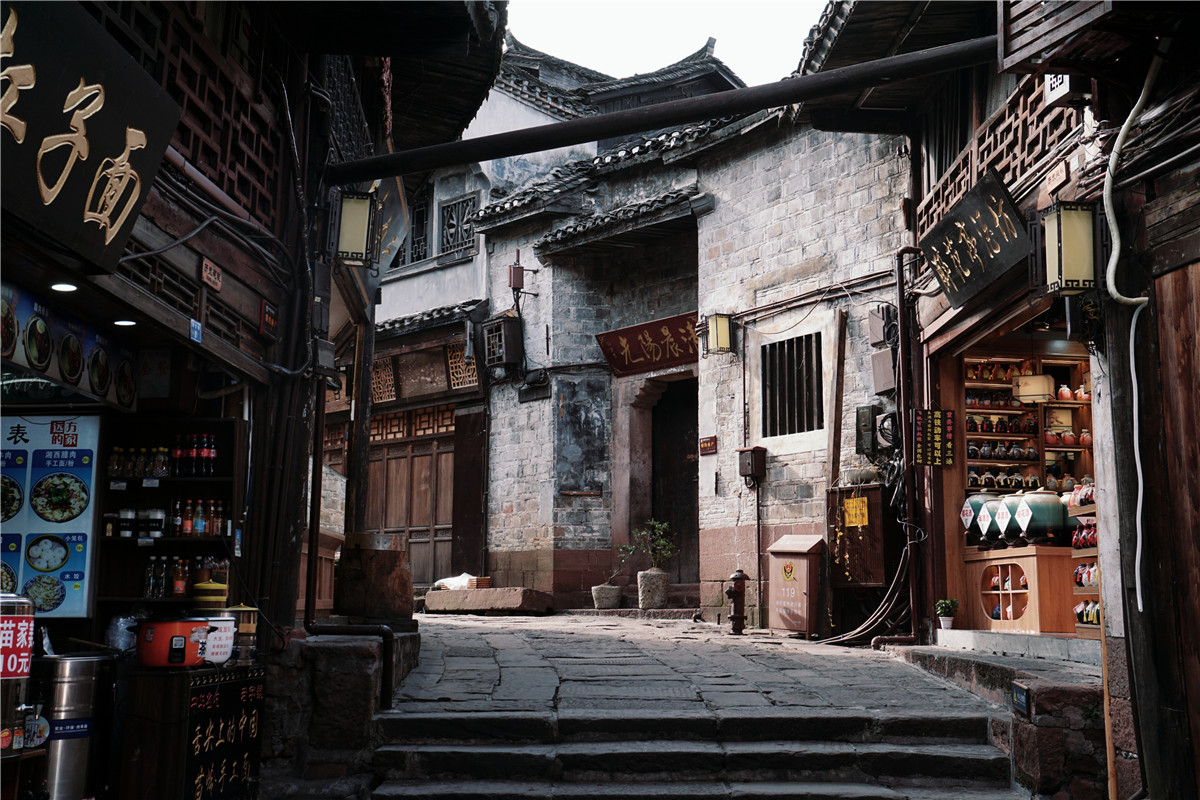
走在古城的青石板上,慢品人间烟火,便是古城生活。
Walking on the cobblestone streets of the ancient city, slowly savoring the flavors of human life, is the life of the ancient city.
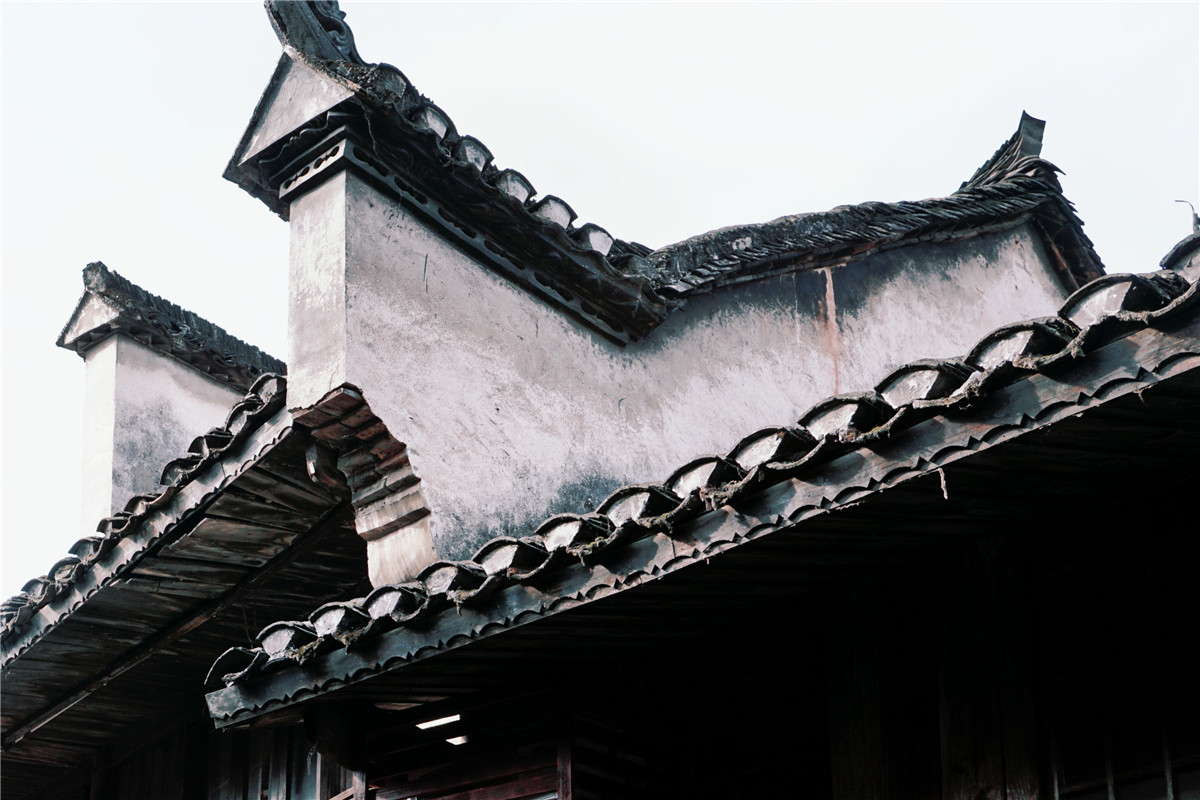
湘西地区的封火山墙有着浓浓的地域特色,造型上数量最多的是马头墙式样。
The fire sealing gables in western Hunan have strong regional characteristics, and the largest number is the style of Matou wall.
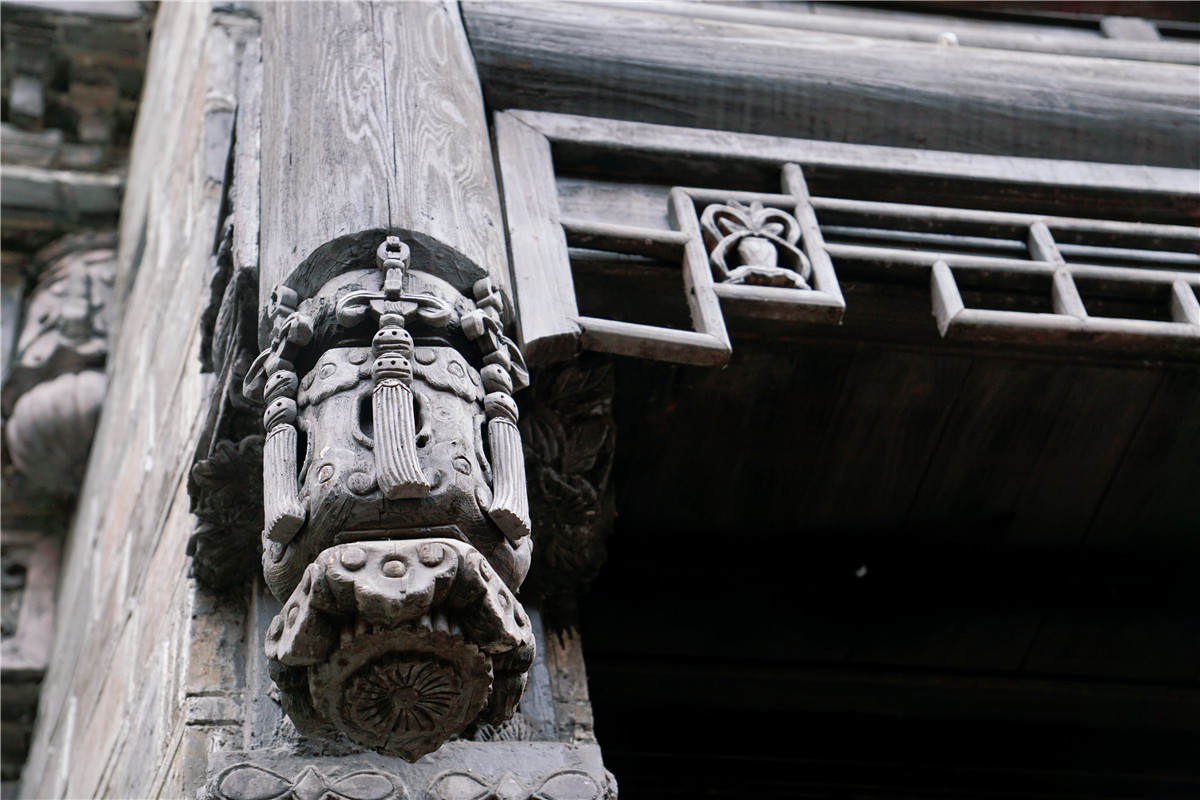
吊瓜柱是穿斗式结构中常见的建筑构件,瓜柱下部悬空,底部也就被雕刻成各种花饰、图案的样子来装点吊脚楼。
The melon column is a common building component in the structure of the pendant, the lower part of the melon column is suspended, and the bottom is carved into a variety of flowers and patterns to decorate the stilted building.
学校名称:北京林业大学
主创团队:李岚娅
指导教师:孙兆昕